Work orders, not spreadsheets
Work-order, routing and station workflows with role-based operator interfaces.
MES / ERP / Software that runs the floor
I built and deployed the MES and ERP running Western Magnetics' production, quality and supply workflows, working with production staff from first prototype through rollout.
Austin, Texas · Open to manufacturing roles

Built from scratch and deployed at Western Magnetics.
Production, quality, purchasing, inventory and shipping in one system.
This résumé
Western Magnetics, 2026 to present
How I work
Work-order, routing and station workflows with role-based operator interfaces.
Interfaces that carry live machine signals into the MES, alongside the mechatronics engineers who built the controllers.
An event stream records production state changes, from incoming inspection to shipment.
From the floor to the business
Selected work / 01—03
Three systems, three different businesses. Ownership from the problem through production.
I built the manufacturing execution system (MES) and ERP the company runs on: every build, quality check, purchase, inventory move and shipment goes through it.
The setting
A hard-tech startup that needed software built around the factory’s real operating needs, with the people doing the work.
Next.js · TypeScript · PostgreSQL · Prisma · Docker
Quality checks, nonconformance records and per-unit testing linked to the build.
Material tracking from incoming inspection through lots, FIFO, BOM consumption and kitting.
An agentic failure-analysis workbench connecting test results to evidence-linked conclusions.
INSIDE THE SYSTEM
Explore the modules, select a record, and follow the information behind a build.
MANUFACTURING EXECUTION
Follow each build from released materials to a tested motor.
| Work order / product | Operation | Status |
|---|---|---|
| 020 / Winding | In progress | |
| 030 / Assembly | Queued | |
| 040 / Balance & test | Quality hold |
Material lots, equipment and routing revision stay attached to the production record.
Portfolio concept using fictional orders, lots and quantities. Illustrates the workflow without exposing a production system.
FROM THE FLOOR TO THE BUSINESS
Factory devices connect through an edge device to the MES. Tablet interfaces are part of the MES, which connects to the cloud-hosted ERP.
The connection point between factory equipment and the MES
Work orders · routings · material genealogy · quality · production records
Part of the MES: where operators interact with the manufacturing workflow.
Orders · purchasing · planning · financial inventory
A shared model for operations, materials, equipment and personnel. Routings and BOMs connect to versioned definitions and resource requirements.
Enterprise / control integration ↗Use the separation of business operations, manufacturing operations and equipment control to reason about responsibilities. The diagram shows the device-to-MES-to-ERP path, rather than a literal Purdue network stack.
Industrial network layers ↗Publish equipment events through a broker so consumers can subscribe without coupling directly to each machine.
Publish / subscribe messaging ↗Define schemas, versions and error behavior at service boundaries. Producers and consumers can evolve against an explicit contract.
Amazon / AWS service-contract guidance ↗Simplified view: factory devices → edge → MES → cloud-hosted ERP. Tablet operator interfaces belong to the MES. Design principles describe the approach; they do not specify every deployed service or network control.
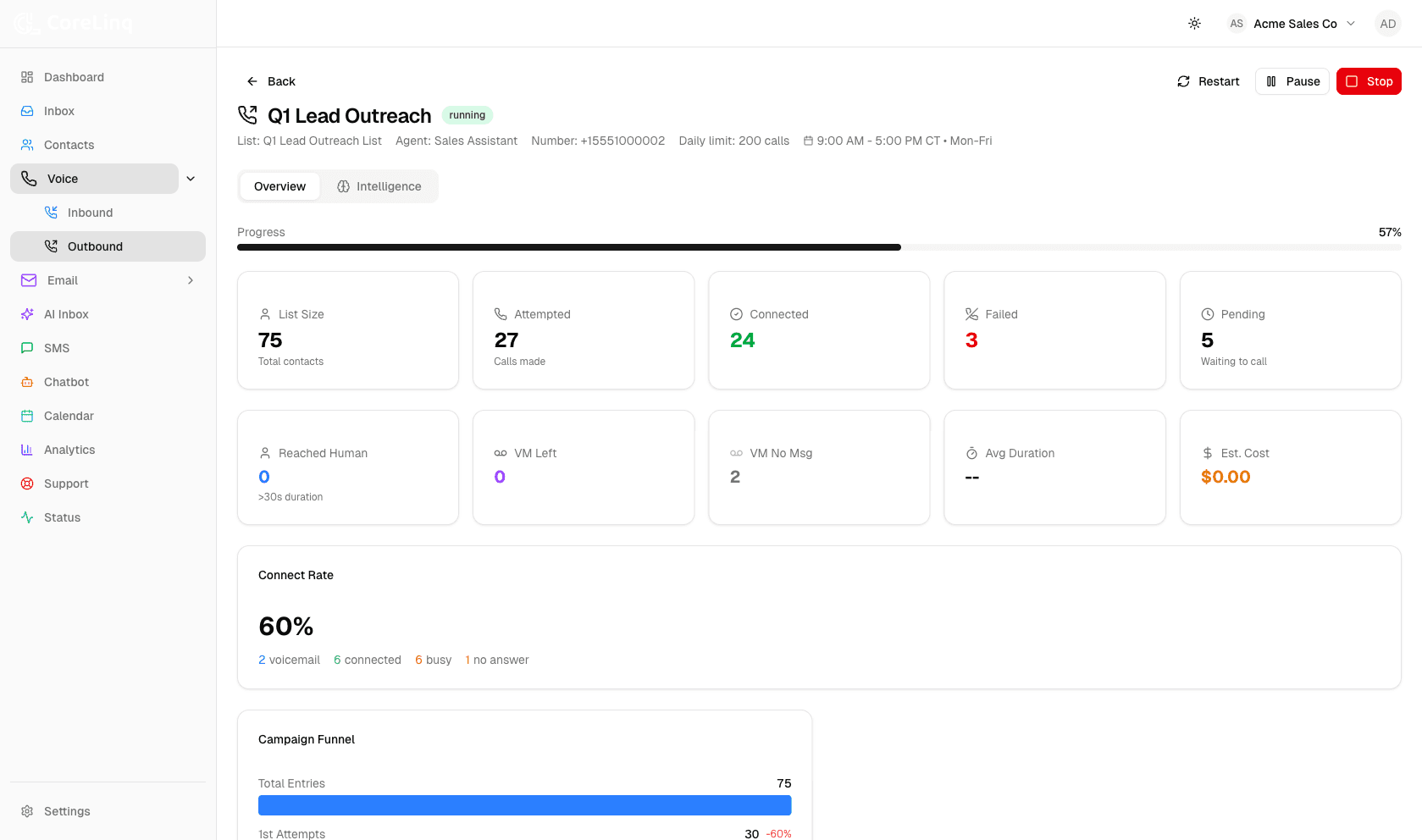
One platform for outreach and follow-up. AI agents make and answer calls, work the inbox and book appointments, then turn conversations into orders.
Next.js · TypeScript · Supabase · Inngest · Retell · Twilio
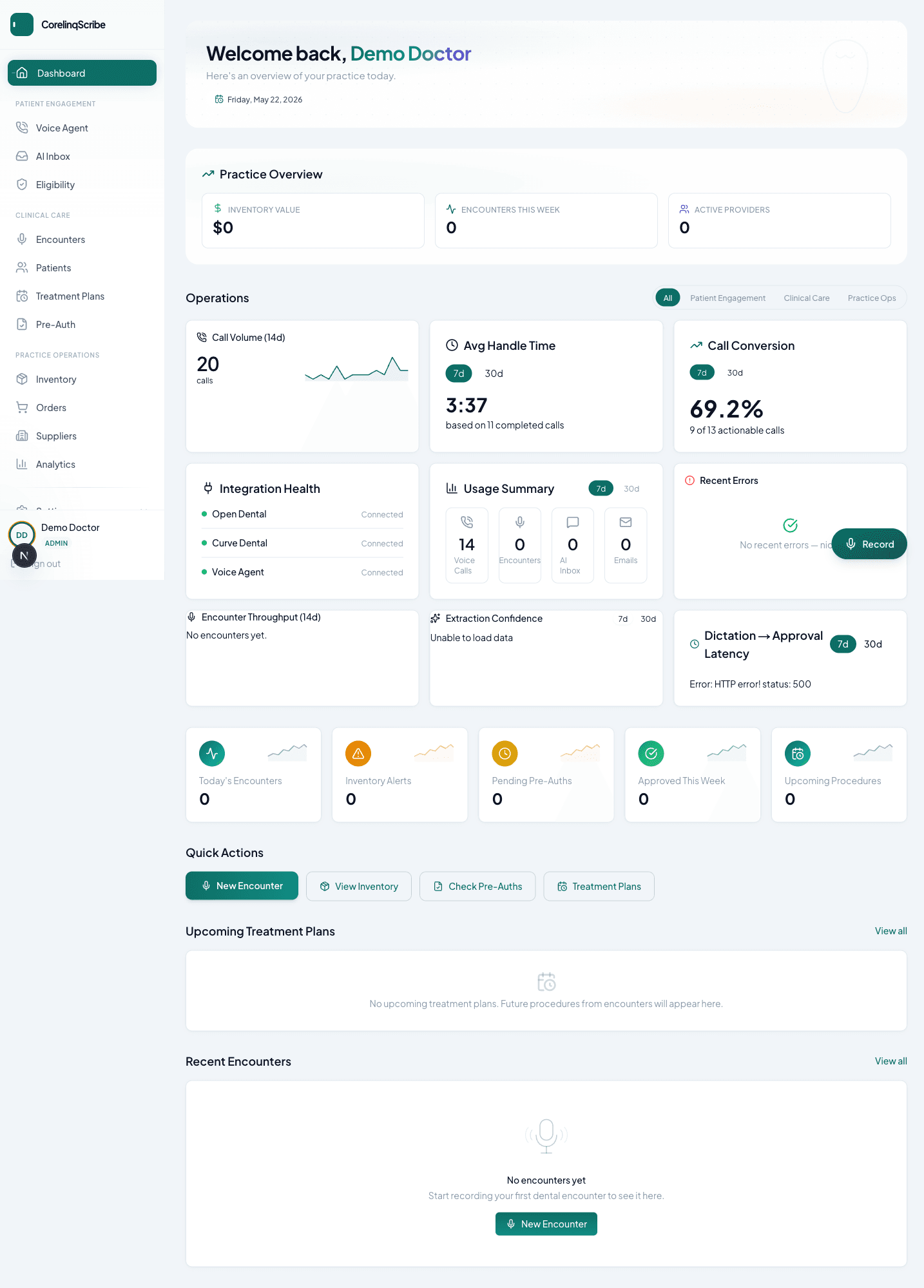
After a patient visit, Scribe drafts the clinical note and billing codes for the dentist to review and approve. It also tells the practice what supplies upcoming appointments need.
Next.js · React · Supabase · Anthropic · OpenAI
Experience
Expedia Group / Vrbo · 2019–2025
I built and managed a team of six data scientists, working with executives on the commercial decisions behind a travel business.
2026 — Present
Built and deployed the MES and ERP running production, quality, purchasing, inventory and shipping.
2025
Designed and built custom SaaS for small businesses, including CoreLinq Communications and CoreLinq Scribe.
2021 — 2025
Built and managed a team of six data scientists. Established executive analytics for commercial strategy and resource allocation.
2019 — 2021
Market segmentation across more than 15 variables; regional reporting for sales visibility and prioritization.
2013 — 2019
Global reporting, data analytics consulting and business analysis.
Toolkit
MES and ERP, work orders and routings, equipment integration, quality records, material tracking and traceability
TypeScript, Python, SQL, Next.js, React, PostgreSQL, Prisma, Docker and API integration
LLM APIs, agent workflows, evidence-linked agent traces, review and hardening of AI-generated code
Fair questions
No. Mechatronics engineers built the controllers. I built the interfaces that carry their live machine signals into the MES, and the workflows that use them.
I worked directly with production staff from the first prototype through integration, hardening and rollout, translating how they actually worked into the software they use.
Work orders, routings and stations write to an event stream that records production state changes. Quality records, per-unit tests and material lots link back to the build.
Two places: AI coding agents during development, with me owning review and hardening, and an agentic failure-analysis workbench that ties conclusions back to source evidence.